
The Billable Hours Leak: Where Freelancers Lose 15–40% of Their Income (And How to Plug It)
Freelancers and small firms quietly lose 15–40% of their billable income to untracked, forgotten work. Here is where the billable hours leak hides — and the lightweight habits that plug it, so the hours you already worked finally reach the invoice. No surveillance required.
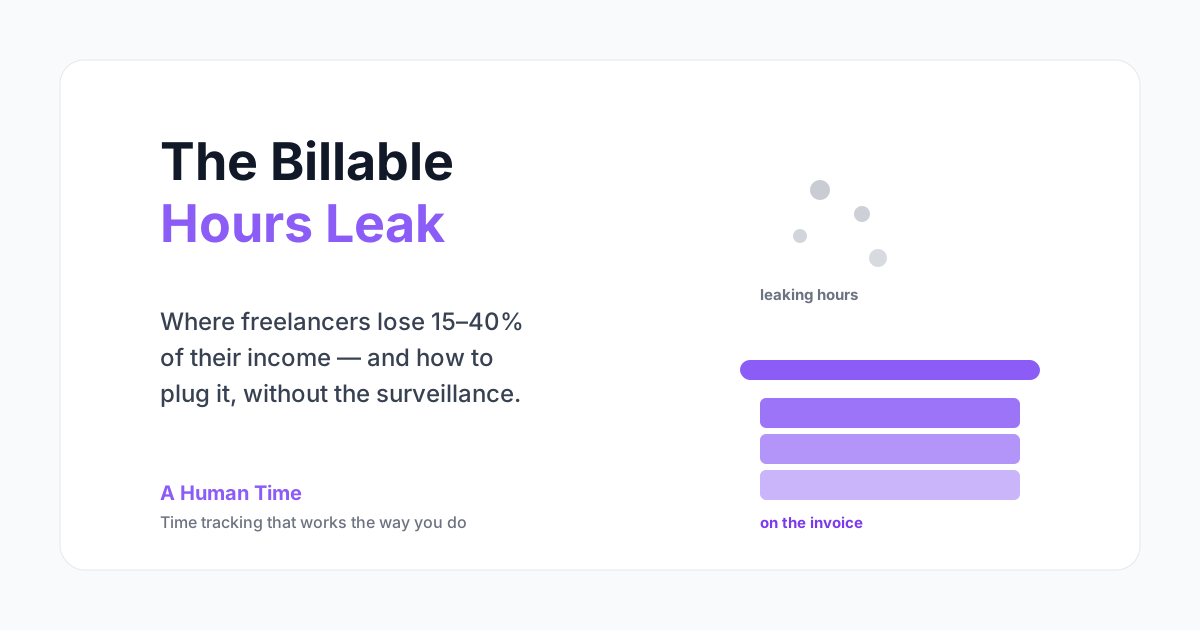
Here's an uncomfortable thought experiment. Add up every stretch of real work you did last week that never made it onto an invoice: the 10-minute "quick question" call, the Slack thread that turned into a 40-minute problem-solve, the revision you did at 9pm and forgot to log. Now multiply that by 50 weeks. For most freelancers and small firms, that pile is the billable hours leak — and it's quietly draining 15–40% of the income you already earned.
That's not a motivational exaggeration. SPI Research's 2026 benchmark pegged industry-wide billable utilization at a historic low of 66.4%, against a profitability threshold of 75%. Independent studies put freelancer under-reporting at 15–25% for anyone tracking in a spreadsheet. At $75/hour, a 20% leak on 30 billable hours a week is around $23,000 a year — money you worked for and simply never captured.
The frustrating part is that plugging a billable hours leak doesn't require raising your rate, finding new clients, or working more. It requires catching the hours you're already working. Let's find where yours is escaping.
Where the Leak Actually Happens
Lost billable time rarely disappears in one dramatic chunk. It evaporates in small, forgettable moments that each feel too minor to log:
- The micro-tasks. A five-minute email, a quick file export, a "can you just..." favor. ActiveCollab's figure is sobering: 15 untracked minutes a day is over 60 unbilled hours a year.
- The between-work work. Context-switching, status updates, Slack, "quick calls." Agencies routinely lose 15–30% of billable time in exactly these cracks between named projects.
- The memory tax. Reconstructing your week on Friday afternoon means guessing, rounding down, and dropping anything you can't remember. The longer the gap between doing the work and recording it, the more revenue gets quietly written off.
- The scope creep you absorbed. The "small" extra ask you said yes to and never tracked separately — so you never had the data to bill it or push back.
Notice the pattern: none of these are laziness or fraud. They're the natural result of trying to remember work instead of capturing it.
Step One: Measure the Leak Before You Fix It
You can't plug a leak you can't see. For one honest week, track everything — not to judge yourself, but to find the gap. Then run two quick numbers:
- Capture rate. Divide the hours you actually logged by the hours you honestly worked. Below 85% means a meaningful leak.
- Leak value. Multiply your unlogged hours by your rate. Seeing "$450 this week" is what turns a vague worry into a problem worth solving.
A Human Time makes this effortless. Because it captures where your hours genuinely go as the work happens — not reconstructed from memory on Friday — the leak stops being a guess and becomes a number you can watch shrink week over week. It's your data working for you, no micromanagement, no one policing your calendar. Start your free trial and let one honest week put a dollar figure on your leak.
Step Two: Plug It With Habits, Not Willpower
Once you can see the leak, these four habits close most of it. None of them require you to become a more disciplined person — they just move the tracking closer to the work.
- Track in the moment, never at the end. The single biggest fix. Start a timer when you start the task; stop it when you stop. End-of-day reconstruction is where most hours drown.
- Give every "quick thing" a home. Create a catch-all billable category for small client work so micro-tasks have somewhere to land instead of vanishing. Fifteen minutes logged beats fifteen minutes lost.
- Make the invisible visible. Track Slack, email, and calls against the client they belong to. If a client generates two hours of "quick" communication a week, that's a conversation about scope — and now you have the data for it.
- Review weekly, bill confidently. A five-minute Friday scan of the week's entries catches anything miscategorized while you still remember it, so your invoice reflects reality instead of a cautious underestimate.
Step Three: Turn Captured Hours Into Honest Invoices
Capturing the time is only valuable if it reaches the invoice. The goal isn't to pad bills — it's to stop giving work away for free. When your tracked hours line up with what the project genuinely consumed, two things happen: your income rises toward what you actually earned, and your client conversations get easier, because every line item is backed by a real record instead of a defensive estimate.
This is where the anti-surveillance distinction matters. Plugging your leak isn't about proving how hard you worked to anyone. It's about you owning an accurate picture of your own effort so you get paid for it. The data serves you, not a manager watching over your shoulder.
The Hours Are Already Yours — Go Collect Them
The billable hours leak is the rare business problem you fix by capturing value you've already created, not by hustling for more. Measure it for one week, close the gaps with a few lightweight habits, and let your invoices finally match your effort. The raise was hiding in your untracked time the whole time.
Track your time without the micromanagement. A Human Time captures where your billable hours really go — as the work happens — so the ones that used to leak away end up on the invoice instead. No surveillance, no guesswork, just your own data working for you. Try A Human Time free → ahumantime.com
Keep reading:
- Billable Hours Tracking: Best Practices That Actually Stick
- Freelancer Time Tracking & Invoicing: A Practical Guide
Want a simple way to start measuring your leak? Grab our free timesheet template and log one honest week — micro-tasks included. The gap will jump right off the page.